
What Permits Are Required for Civilian Drone Operations?
As drones move beyond hobby flying into logistics, infrastructure inspection, emergency response, mapping, and early urban air mobility trials, the permitting question becomes less simple than “Do I need a license?” In practice, civilian drone compliance is usually a stack of obligations: aircraft registration, pilot competency, airspace authorization, operating approval, insurance, privacy compliance, and sometimes an airworthiness review.
What permits are needed for civilian drone operations? The answer depends on where the operation takes place, the drone’s mass and technical configuration, whether the flight remains within visual line of sight, what it carries, and how close it operates to people, airports, roads, or sensitive infrastructure. A lightweight camera drone used over an empty field is regulated very differently from a cargo drone intended to fly repeatedly along a suburban delivery route.
The most important practical distinction is this: registration identifies the aircraft; a pilot certificate demonstrates competence; an operational authorization permits a specific higher-risk mission. These are often confused, and that confusion can delay projects long after the aircraft has been purchased.
The Core Permissions: What Usually Applies
Most civil aviation authorities use a risk-based model. Low-risk flights may proceed under standard operating rules once the operator meets baseline requirements. Higher-risk missions require a separate approval because the risk is created by the operation, not merely by the drone itself. A small quadcopter can become a high-risk aircraft if it is flown beyond visual line of sight near a hospital heliport or over a dense public event.
Not every country uses these exact terms. Some authorities issue a permit to operate; others distinguish between operator registration and a mission authorization. The legal labels vary, but the underlying questions are remarkably consistent: Who is accountable? Is the pilot competent? Is the airspace available? Does the aircraft have the right equipment? What happens if a command link, navigation source, battery, or propulsion component fails?
Registration Is Not a Blanket Permission to Fly
Registration is often the first administrative step, particularly for commercial operators. It generally links a unique aircraft or fleet account to an individual or organization. In the United States, operators should review Federal Aviation Administration requirements, including the rules that apply to registration, remote pilot certification, and Remote ID. In the European Union, the framework administered through national aviation authorities and aligned with European Union Aviation Safety Agency rules commonly focuses on operator registration and category-based operations.
A registration number does not override local flight restrictions. It does not allow an operator to enter controlled airspace, launch beside a prison, fly above a public gathering, or conduct a delivery flight beyond visual line of sight. This is a frequent planning error in real operations: a team completes the online registration process and assumes the project is cleared. It is not.
For organizations, registration also needs an internal ownership model. The legal operator, aircraft owner, maintenance provider, payload integrator, and remote pilot may be different parties. That arrangement is manageable, but the accountability chain must be clear before the first flight. If an inspection drone has a third-party thermal camera, an externally supplied battery pack, and mission-planning software managed from another country, responsibility cannot be left vague.
Pilot Certificates and Competency Requirements
Commercial drone work normally requires more than good stick skills. A qualified remote pilot needs to understand airspace, weather, crew coordination, battery limitations, emergency procedures, and the operational limits of the particular aircraft. In the United States, many commercial small-drone operations fall under the FAA’s Part 107 framework, which includes a Remote Pilot Certificate requirement. Elsewhere, authorities may require online training for lower-risk operations and more detailed competency evidence for complex ones.
The certificate is only one layer. A pilot who is competent to perform a daylight roof inspection may not be qualified under a company’s procedures to supervise a long-range pipeline mission. The latter can involve visual observers, handover procedures, lost-link contingencies, terrain assessment, communications discipline, and a much more demanding flight-planning process.
For larger cargo drones and emerging eVTOL systems, regulators are increasingly concerned with the wider operational team rather than the person holding the controller. Dispatch functions, maintenance release, flight-following, software configuration control, and command-and-control link monitoring may all enter the approval discussion.
Airspace Approval Is Often the Decisive Permit
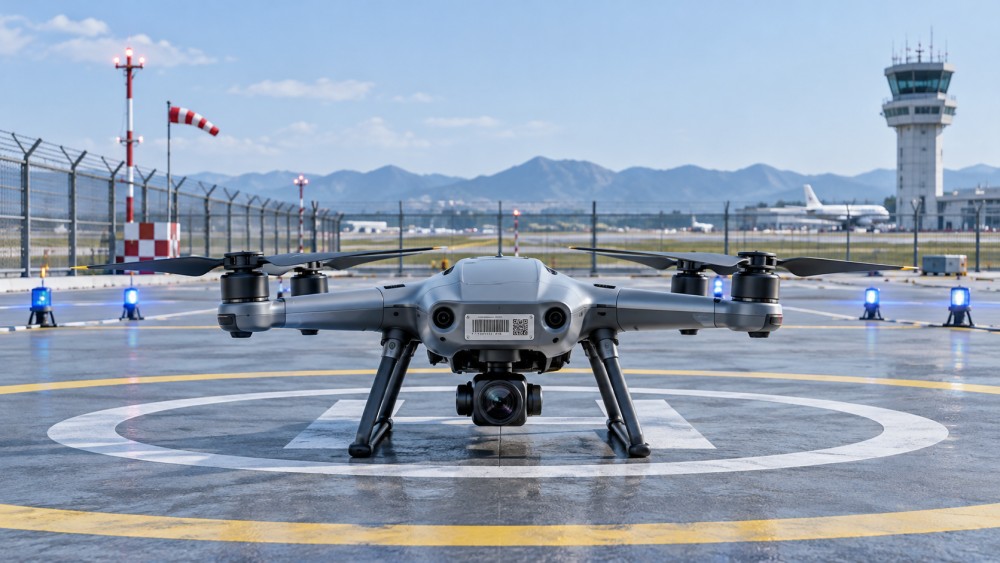
Airspace authorization is where otherwise straightforward missions become complicated. The same drone may be lawful over private farmland and prohibited a few kilometers away because the second location lies near an airport, controlled airspace boundary, emergency-response zone, or protected facility.
Operators should assess the precise launch point, planned route, maximum altitude, and contingency area rather than relying on a broad city-level assumption. A drone inspecting a bridge, for example, may need to consider not only nearby airspace but also road authority restrictions, rail corridors, waterways, critical-infrastructure rules, and temporary restrictions related to emergency activity. Landowner consent is useful, but it is not an aviation authorization.
Controlled airspace approvals may be available through a regulator’s portal or an approved service provider, depending on the country. They are typically limited by time, location, altitude, and operating conditions. Treat those limits as part of the flight plan, not as fine print. A change in launch site or flight height can invalidate the approval assumptions.
When a Standard Rule Set Is No Longer Enough
The most consequential permits are usually needed for missions outside ordinary visual-line-of-sight operations. Beyond visual line of sight, commonly called BVLOS, is central to the business case for long-distance inspections, agricultural coverage, security patrols, and cargo drones. It is also where aviation authorities expect a disciplined safety case rather than a generic checklist.
A BVLOS application may need to explain how the operator will maintain separation from other aircraft, manage lost communications, detect abnormal aircraft behavior, protect people on the ground, and respond to changing weather. The details vary by jurisdiction, but the operational logic is universal. A reliable command link alone is not a complete solution. The aircraft must also have a credible plan for navigation degradation, energy reserve, geofencing behavior, and safe termination or recovery.
Other activities that commonly trigger additional review include flights at night, operations over people, transport of payloads, release of materials, operations from moving vehicles, and repeated flights in densely built environments. Some lower-risk versions may be permitted under published rules; others need a waiver or explicit authorization. The practical lesson is to classify the mission before selecting the drone. Buying an aircraft first and asking for permission later can lock a project into an expensive redesign.
A Useful Comparison: U.S. and European Risk Frameworks
The United States and Europe share broad safety objectives but organize approvals differently. In the United States, Part 107 provides a familiar baseline for many small commercial drone activities, while operations outside its standard provisions may require waivers, airspace authorization, or a different certification pathway. Larger-scale package delivery and certain advanced operations can involve additional FAA approvals and a more substantial operating model.
In the European Union, operations are often described through the Open, Specific, and Certified categories. The Open category is intended for lower-risk operations performed within defined limitations. The Specific category is relevant where operational risk exceeds those limits and may require an authorization, a declaration under an accepted standard scenario, or a recognized operator privilege. The Certified category addresses the highest-risk activities, including operations that resemble conventional aviation in their potential consequences.
Neither framework should be reduced to a simple “license comparison.” A mission that is routine under one set of operating conditions may become a complex approval exercise when moved across a border, fitted with a new payload, or transferred from rural inspection to urban delivery. National rules, local restrictions, and implementation practices still matter.
Airworthiness Matters More as Drones Become Aircraft Systems
For a basic visual-line-of-sight survey mission, the regulator may focus mainly on operational compliance. For cargo drones, high-endurance platforms, and aircraft designed for repeatable autonomous routes, airworthiness becomes much harder to separate from operational permission.
The question is no longer simply whether the aircraft can take off. It is whether its propulsion, energy storage, flight controls, navigation sensors, structural joints, and software behave predictably under normal and abnormal conditions. That is especially relevant where composite fuselages, titanium fasteners, battery enclosures, redundant flight-management functions, or fly-by-wire architectures are part of the design.
This is also why maintenance documentation deserves more attention than it receives. An operator seeking advanced approval may need to show configuration control: which battery revision is installed, which firmware version is active, how damaged propellers are removed from service, and who may approve a return to flight. These practices are familiar in manned aviation. They are becoming equally relevant in the low-altitude economy.
For aerospace intelligence teams such as AL-Strategic, the regulatory shift is worth watching because it connects design choices directly to market access. A new composite airframe, improved thermal-management approach, or more redundant avionics architecture may have commercial value only if it supports a credible certification and operating case. The same relationship applies to future special-purpose aircraft, including cargo drones and eVTOL platforms.
Do Not Forget the Permissions Outside Aviation Law
Aviation approval is not the whole compliance picture. Drone operators may also need permission from property owners, municipalities, park authorities, port authorities, utility operators, or event organizers. Privacy and data-protection obligations can be material when cameras, thermal sensors, LiDAR, or communications payloads collect identifiable information.
Insurance is another area where legal minimums and commercial reality diverge. A client may require aviation liability cover, professional indemnity cover for survey outputs, or evidence that subcontracted pilots are covered. For infrastructure work, contract terms may impose stricter requirements than the aviation regulator does.
Cross-border work adds one more complication: the aircraft, radio equipment, pilot credentials, mapping data, and batteries may each be subject to separate import, spectrum, or local operating rules. A permit issued in one country should never be assumed to travel with the aircraft.
A Better Way to Prepare a Drone Mission
Before filing any application, define the mission in operational terms: location, altitude, route, aircraft mass, payload, crew roles, duration, visual-line-of-sight status, proximity to people, and contingency landing areas. Then identify the authority responsible for airspace and the authorities controlling the site itself. This sequence avoids wasting time on the wrong permit pathway.
The strongest applications tend to be specific rather than ambitious. They describe the real operation, acknowledge its hazards, and explain practical mitigations. A regulator is unlikely to be persuaded by broad claims about “advanced AI” or “high reliability” without evidence of how the system behaves when a sensor fails, a link drops, or a landing site becomes unavailable.
Civilian drone operations do not have one universal permit. They have a permission set shaped by risk. For routine flights, that set may be limited to registration, pilot compliance, and airspace checks. For cargo, BVLOS, urban, or highly automated operations, it can extend into operating certification, airworthiness evidence, maintenance control, and detailed safety assurance. The earlier that distinction is recognized, the more realistic the aircraft selection, schedule, and business case will be.